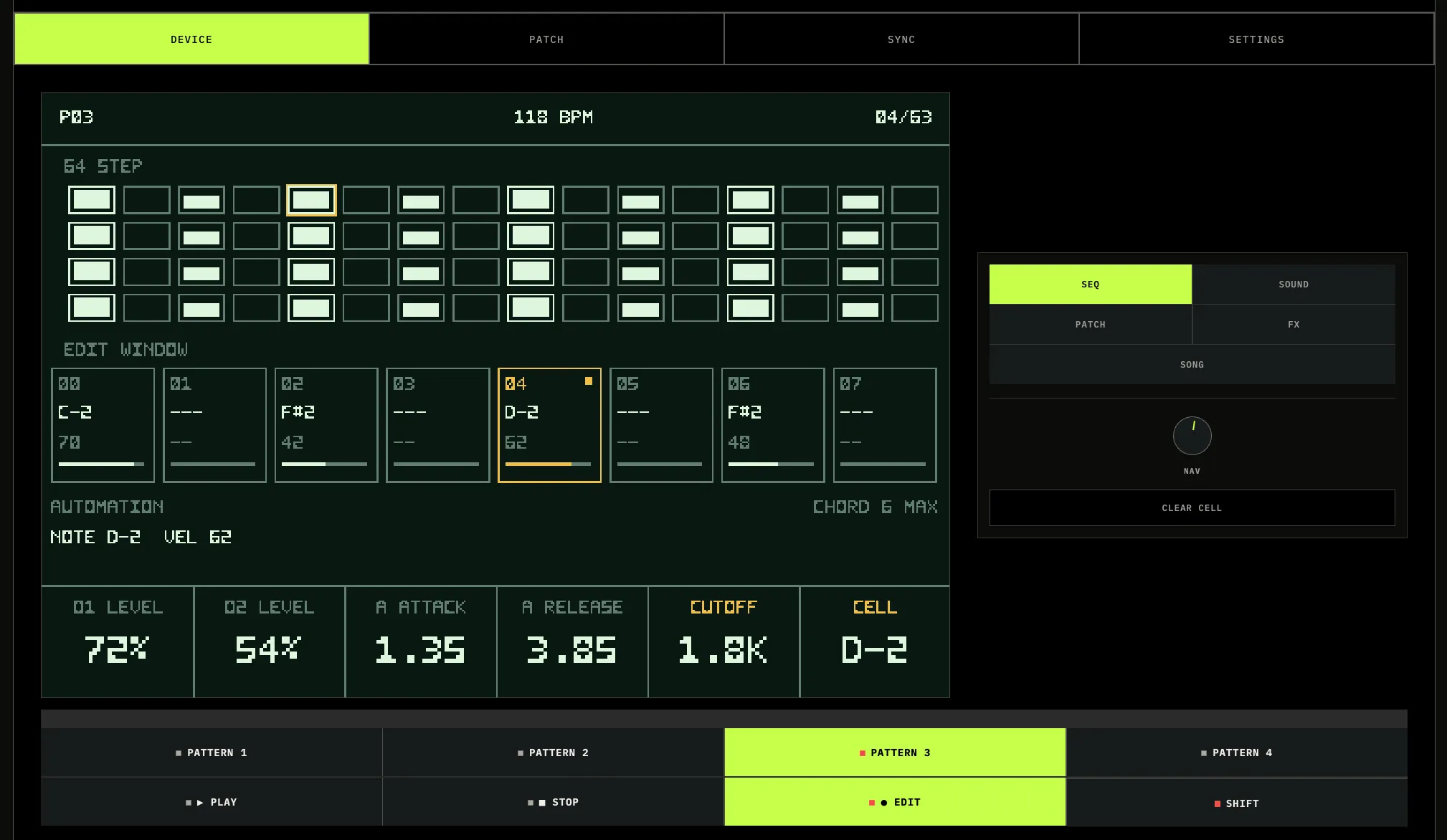
Before the hardware was ready, we built a complete browser version of Viberoo Seeq. It gave us a fast way to develop the sound engines, sequencer, patch system, and interface without waiting for every part of the physical instrument to be in place. With the firmware now running on the device, that web version has a new job.
One instrument, more room to work
Viberoo Seeq is designed to be playable on its own. The companion app does not replace the hardware interface; it gives the same instrument more space when a larger screen is useful.
The sequencer can show an entire pattern at once, make individual steps directly clickable, and expose navigation without squeezing more controls onto the front panel. The larger view is useful for detailed editing, while the physical device remains the place to play and perform.
Connected over USB
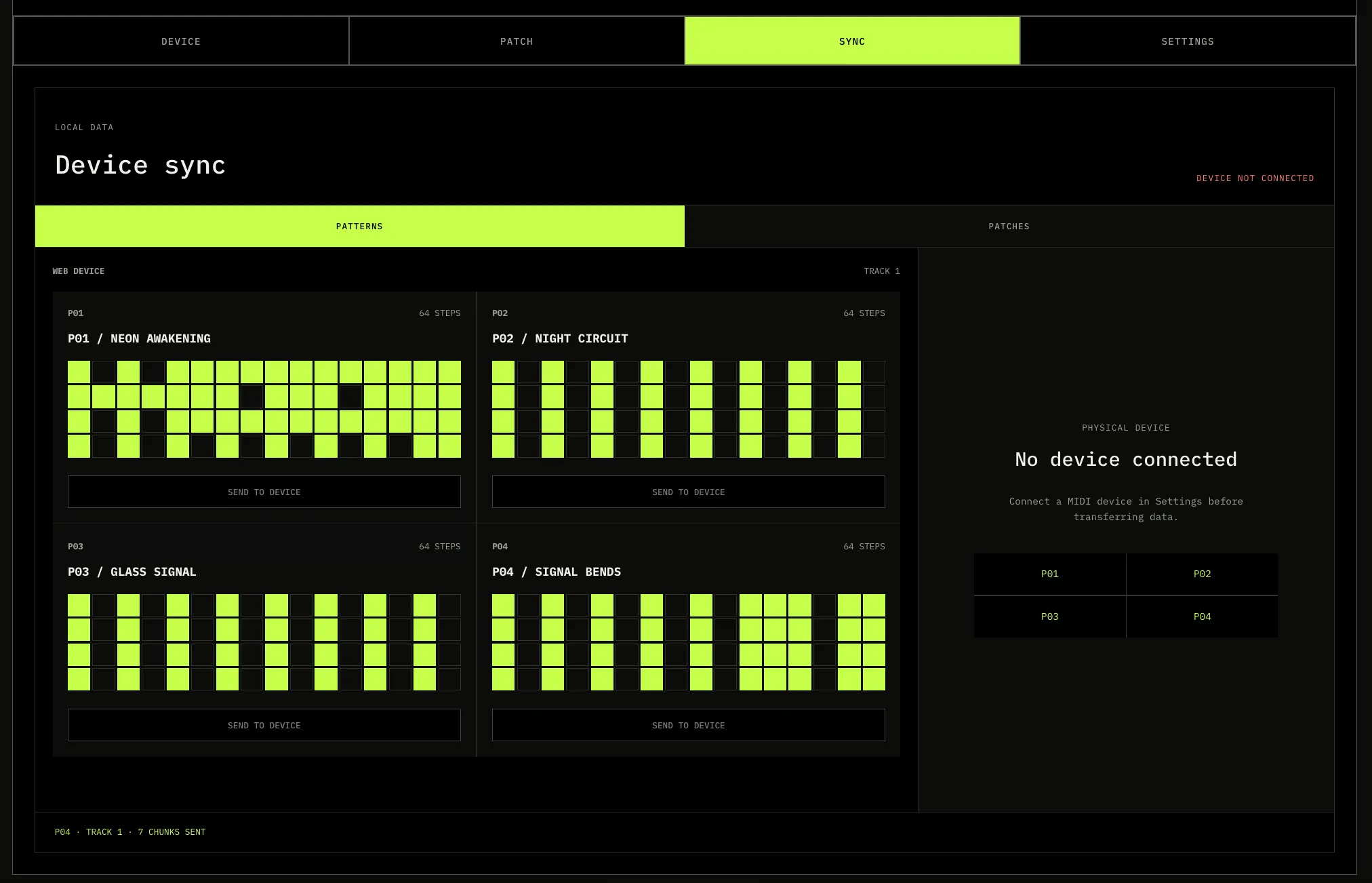
The hardware already appears as a USB MIDI device, so the browser can establish a direct connection without a separate account or cloud service. An external MIDI keyboard can be routed to the web synth, the physical instrument, or both, and the same connection now carries companion data using a dedicated SysEx protocol.
Our first data transfers move in one direction, from the web app to the instrument. A pattern can be dropped onto the connected device and written to the matching P01–P08 slot. Patches can be sent in the same way and loaded onto the active hardware track, including the synth engine, its controls, and the delay and reverb settings.
A patch librarian built around sound design
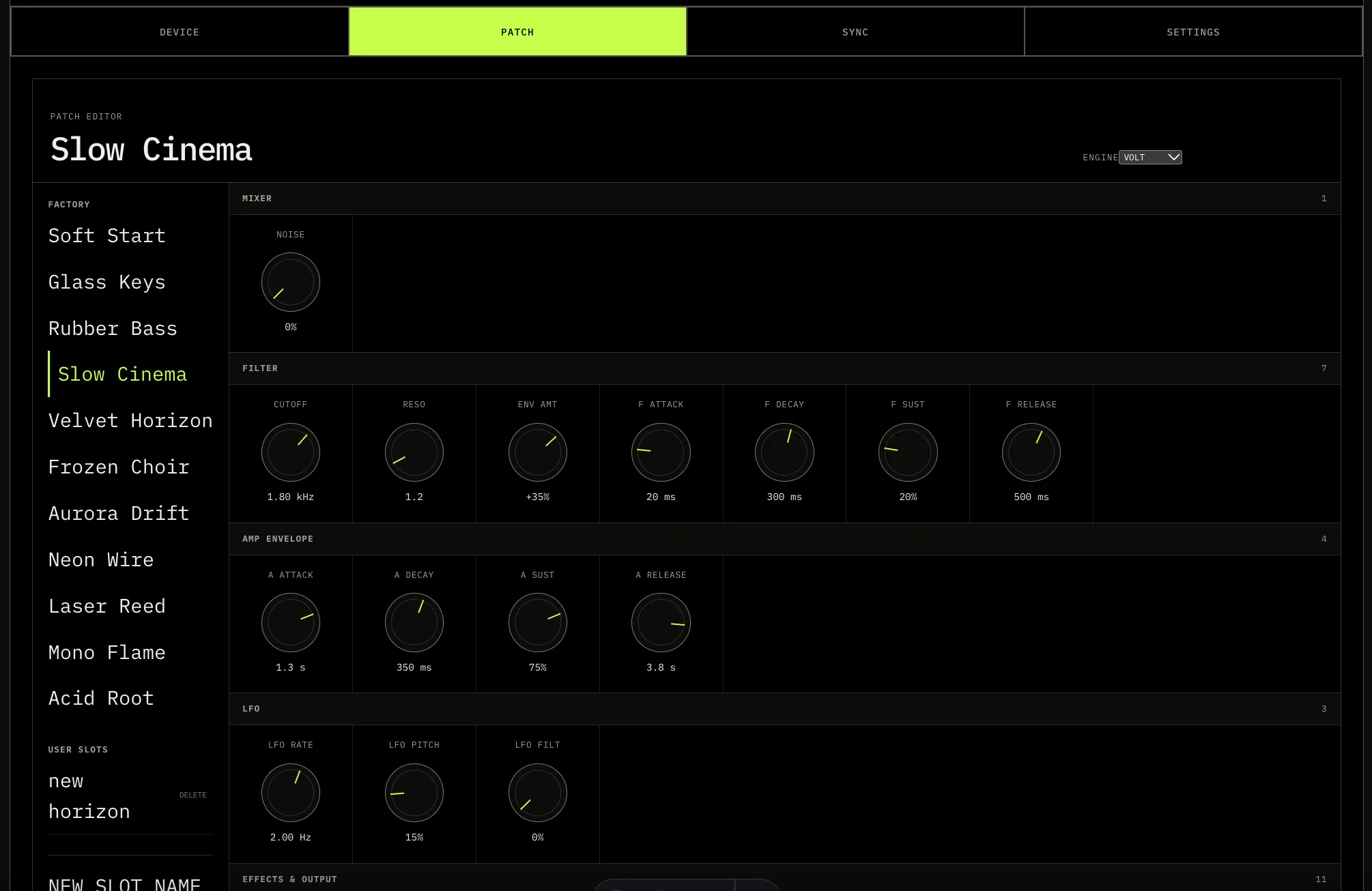
The new patch editor opens every parameter for the selected synth engine in one view. Start with a factory sound, change it without overwriting the original, give the result a name, and save it as a new patch in the browser library.
Those patches are stored locally on the web device and can be exported as files. That makes the library useful beyond one session: keep versions of a sound, move them between computers, or send a patch to another Viberoo Seeq user. Importing the file brings the patch back into the editor, ready to adjust, play, or transfer to the hardware.
Growing beyond the browser
This is the beginning of the companion workflow rather than its final shape. Bidirectional sync, deeper library tools, and a clearer overview of everything stored on the instrument are natural next steps as the firmware and app continue to meet in the middle.
We are also working toward dedicated iPad, iPhone, and Android apps with much of the same functionality. The larger tablet canvas should be especially well suited to sequencing and patch editing, while a phone can make a useful portable librarian and transfer tool. The goal is the same on every platform: keep Viberoo Seeq immediate as hardware, then add detail and flexibility when another screen is close by.