How it works
Think in patterns. Finish whole songs.
Viberoo keeps writing, sound design, mixing, and arrangement close together. You can follow an idea from one note to a complete structure without leaving the instrument.
Try the workflowThe sequencer
See the whole pattern, one step at a time.
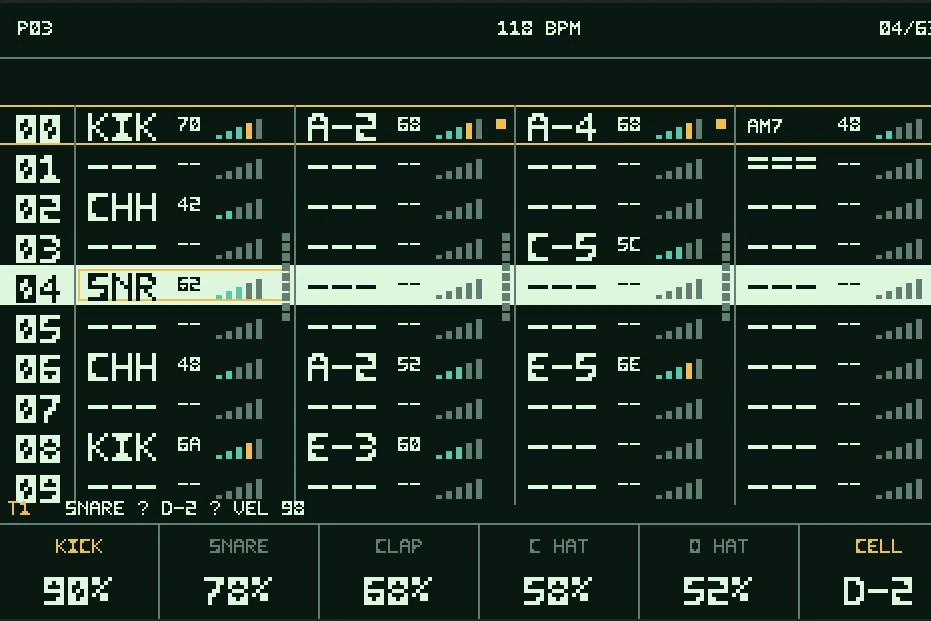
A pattern reads from top to bottom across 64 steps. Enter a note or chord, leave a step empty, or decide exactly where a voice ends. The vertical layout keeps the musical structure visible while you edit.
Velocity and automation live alongside the notes, so dynamics and movement become part of the pattern rather than separate editing tasks. The highlighted row shows exactly where you are working.
Sound engines
Six controls, focused on the sound in front of you.
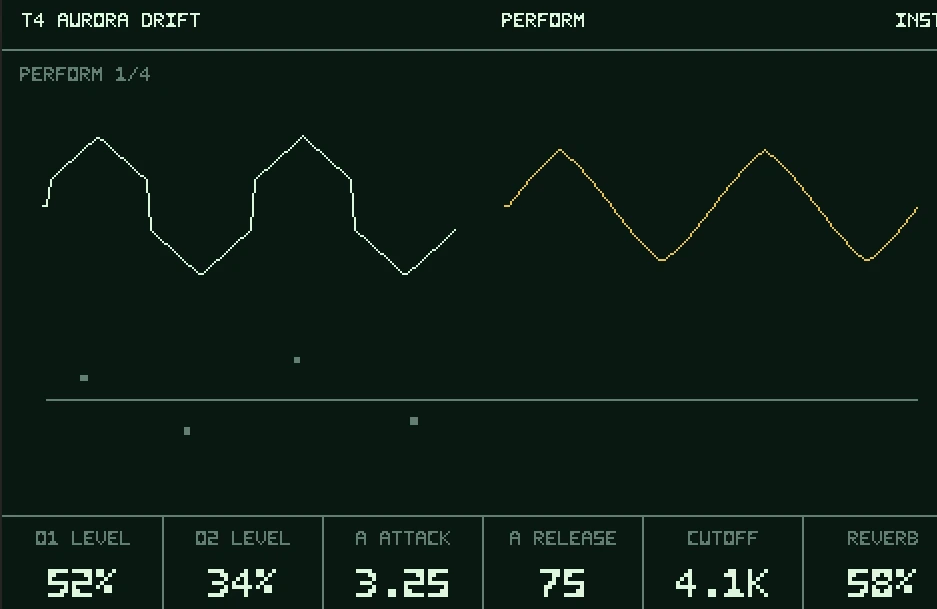
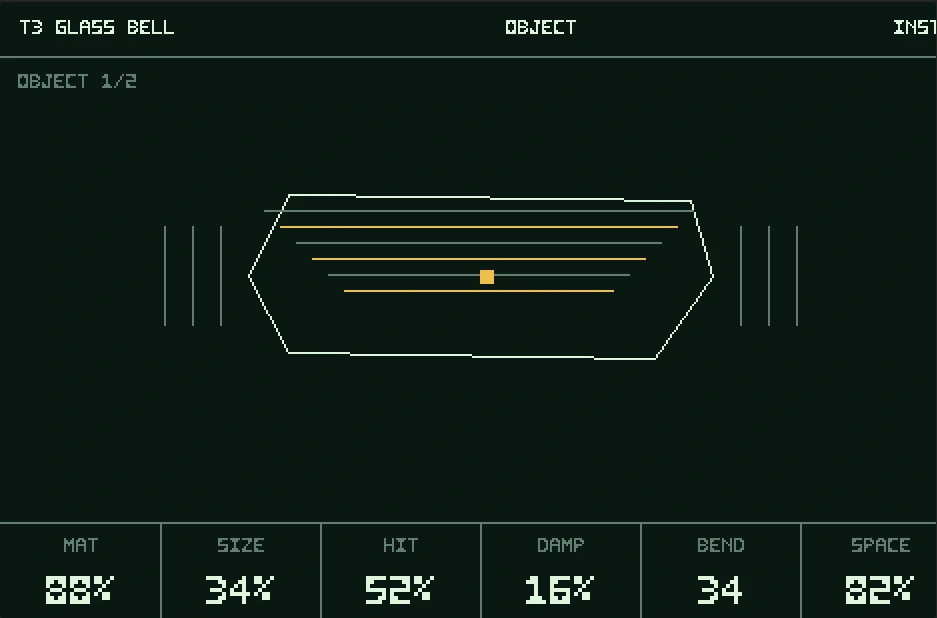
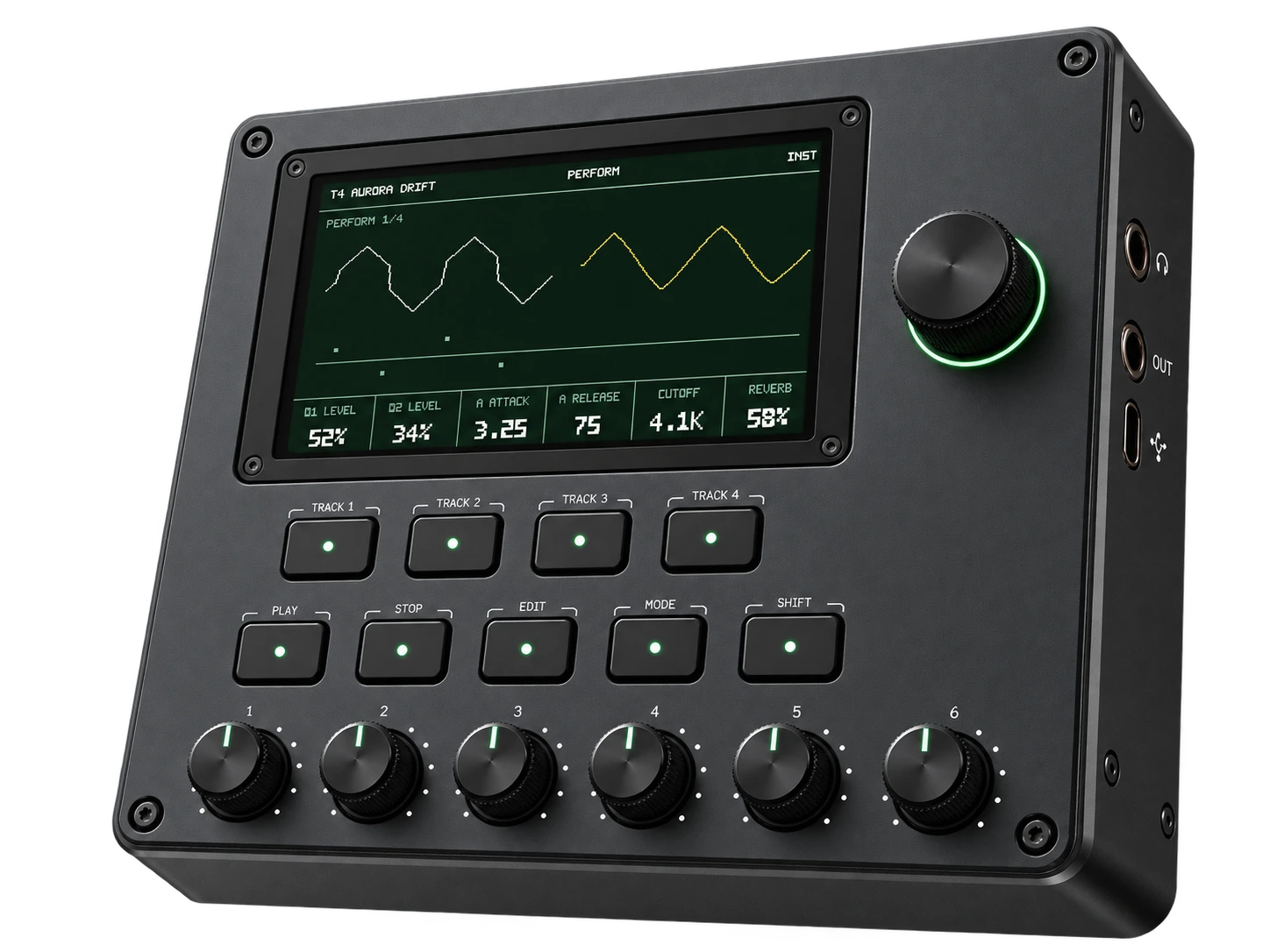
The six hardware encoders follow the six parameters shown along the bottom of the display. Change engine or page and those controls take on the parameters that matter there, so shaping a patch stays direct.
Different engines expose different models. Volt centers on oscillators, envelope, filter, and space. Object treats the sound as a struck physical form, with material, size, hit, damping, bend, and space controls.
Live pattern switching
Move to the next idea without losing the beat.
Four dedicated buttons put eight patterns directly under your fingers: P01–P04 normally, then P05–P08 while Shift is held. Choose another pattern during playback and Seeq queues it until the current pattern finishes, keeping transitions deliberate and rhythmically locked.
Use the eight slots for variations, contrasting sections, or completely different sounds. The next move stays ready without interrupting what is already playing.
Song arrangement
Turn patterns into a beginning, middle, and end.
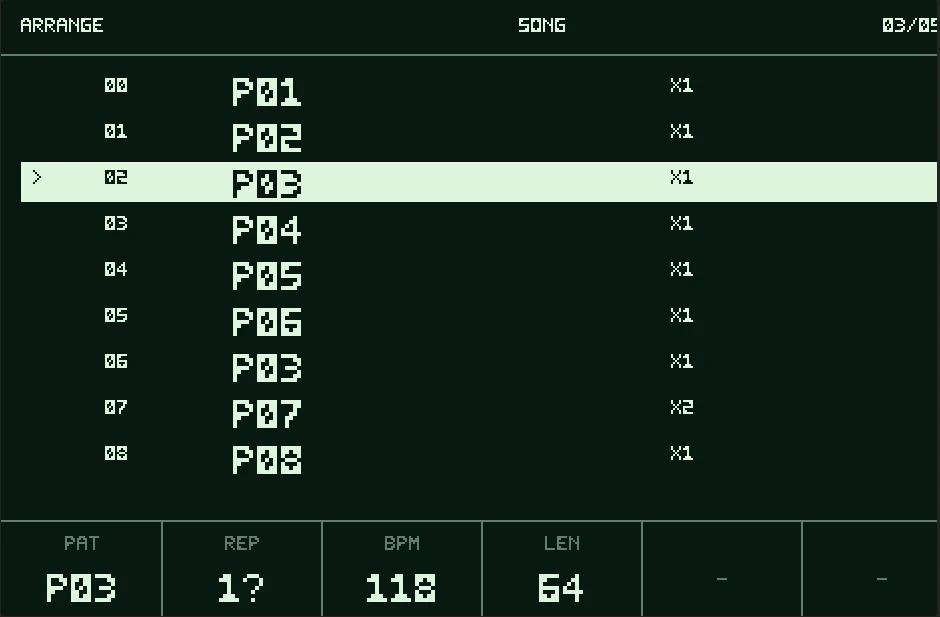
A pattern captures one musical idea. The arranger places those patterns in order to create the song. Repeat a section, move to a variation, or bring an earlier pattern back without copying its individual notes.
Each row names the pattern and its repeat count. Tempo and pattern length remain close at hand, so the structure is readable as a single sequence rather than hidden across menus.
Playable prototype
The fastest way to understand the workflow is to use it.
The browser prototype uses the same single-sequence pattern, sound-engine, and arrangement model as the hardware.
Play Viberoo Seeq